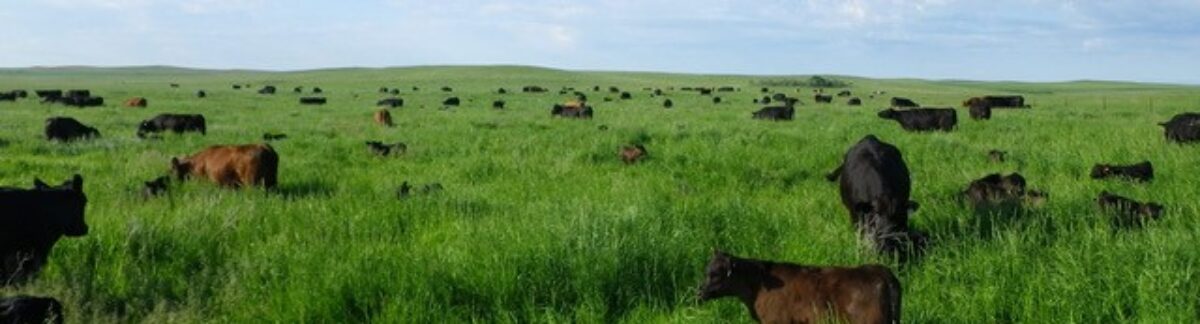
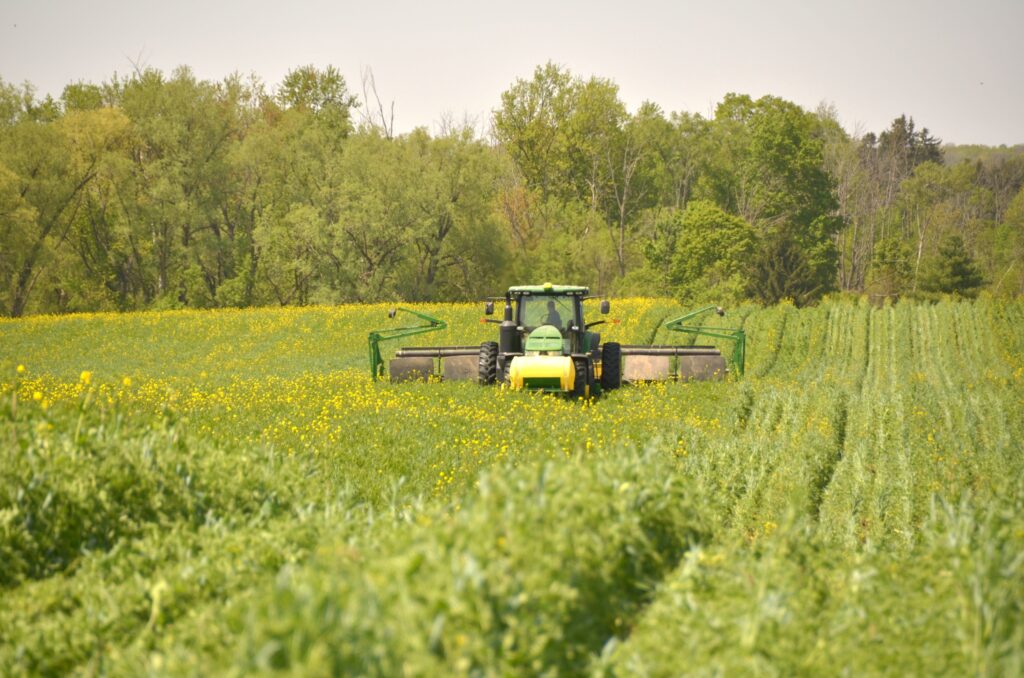
How well-managed grazing rebuilds soil, water, and wildlife habitat.
As pastures slow down for fall, it’s a good moment to look at what’s happening underground. On AGA farms and ranches, cattle, sheep, goats, and bison aren’t just raised on the land. They help build it.
When animals graze and then move on, they trim plants, press seed and manure into the soil, and leave the pasture to rest and regrow. Done well, that cycle feeds soil life, keeps living roots in the ground, and helps rain soak in instead of running off.
That’s the idea behind AGA’s Regenerative Land Health Standards. The goal is simple: improve the relationship between animals, soil, and ecosystems. Producers following the standards work from six principles:
• Understand the farm’s own context: soil, climate, and landscape
• Disturb the soil as little as possible
• Grow as many kinds of plants as possible
• Keep the ground covered
• Keep living roots in the soil year-round
• Bring livestock into the pasture’s nutrient cycle
The U.S. Department of Agriculture (USDA) recently launched a US$700 million Regenerative Pilot Program. It aims to help farmers adopt practices that improve soil health, enhance water quality, and boost long-term productivity, while strengthening America’s food and fiber supply.
The pilot is administered by the Natural Resources Conservation Service (NRCS). It will fund two existing conservation programs that pay farmers to implement conservation practices, the Environmental Quality Incentives Program and the Conservation Stewardship Program. USDA is aiming to streamline the application process, enabling farmers to bundle multiple practices into a single application, reducing barriers to entry for both beginning and advanced producers.
Good stewardship is not about minimizing disturbances, but about optimizing disturbances to produce the best ecosystem and productivity outcomes.
04.09.25
by John Kempf
The health and productivity of soils, livestock, plants, landscapes, ecology, and people is guided and shaped by deliberate disturbance — deliberate in the sense that the choice to implement a specific disturbance is a considered, conscious and intentional one. A choice that gets made as a subconscious pattern of habit, indoctrination, or dogma is not a deliberate choice. To be good stewards of the landscape, we need to make mindful choices of the disturbances we impose.
All active management decisions and actions result in imposing a disturbance, whether that be grazing livestock, pruning a tree, moving a fence, locating a water trough, adding a soil amendment, using a wormer, adding fertilizer, spraying a pesticide, or tilling the soil.
Disturbance is a reset action that can lead to greater soil and ecosystem health and productivity when used wisely. And disturbance can also reset soil and ecosystem health backward when not used wisely.
Moving Out of Equilibrium to Improve the Ecosystem
Reset actions and wise disturbance are a foundational requirement to trigger optimal health and performance outcomes and are inherent in natural ecosystem function. When a thermodynamic system remains in equilibrium, there is no output of energy or growth. If we desire for an ecosystem to evolve, to grow, to expand its carrying capacity and its biological diversity, then there is a requirement for stewardship decisions to move things temporarily out of equilibrium.
Deliberate disturbance in an ecosystem is the equivalent of pushing a pendulum. Without a push, eventually a pendulum stops moving and there is no further energy output. A slight touch to reset it will get it moving again, and the energy released from the back-and-forth oscillation is cumulative and much greater than the energy applied to get it restarted. A pendulum with no movement is a pendulum at equilibrium. A natural ecosystem at equilibrium, with no disturbances to reset it, is static and begins to decline.
Any specific disturbance is not inherently good or bad. The question to be determined is if the particular disturbance serves as a beneficial reset action in a particular context. When a reset action is applied, does it lead to greater ecosystem health and function in a reasonable timeline? A reset action that is very valuable in one context may be detrimental in another. A reset action that is needed only once in one context might be needed routinely in another.
A volcano is a reset action that can produce very positive ecosystem outcomes over a decades-long time period. A large bison herd eating every green leaf to the ground for weeks at a time is a reset action that appears to have negative consequences in the short term but is a long-term net positive. Pruning a vine or tree of a large percentage of its total biomass might appear to some as a major short-term negative, but we know that the disequilibrium this creates leads to much greater productivity.
Thinking about deliberately creating productive disequilibrium and deliberate reset actions that fit our particular context provides us with a first-principles framework such that we can lose all manner of dogma and indoctrination in our thinking. This approach is invaluable, for we have a lot of dogma to overcome around the use and value of some types of disturbance.
Introducing the world’s first Regenerative AI Agronomist. A groundbreaking tool that delivers real-time, data-informed crop guidance rooted in regenerative agriculture. Built on Advancing Eco Agriculture’s proprietary knowledge and shaped by decades of experience from AEA consultants and regenerative farming leaders, this AI-powered system offers practical, biologically sound recommendations to support plant health, improve resilience, and reduce reliance on synthetic inputs.
We’re thrilled to announce the Beta launch of FieldLark AI — the world’s first regenerative AI agronomist, built by AEA to bring decades of in-field expertise and biological insight to your fingertips.
Whether you’re troubleshooting soil health, fine-tuning foliar timing, or exploring nutrient strategies for better yields, FieldLark AI delivers real-time, biologically sound answers—anytime, anywhere.
This is a game-changer for regenerative growers.
And for now, it’s invite-only.
We’re opening applications to 500 users for the first phase of Beta access. If selected, you’ll be among the first to explore the tool that’s helping us scale agronomic insight and accelerate the transition to regenerative farming.
Mariah Squire is a Digital Content Editor for Successful Farming and Agriculture.com. Before joining Successful Farming full-time in 2024, she was a contributor covering the weekly USDA Crop Progress report. After obtaining her PhD in microbiology in 2021, she spent two and a half years writing protocols for clinical trials at Medpace in Cincinnati, Ohio.
Soybean planting progressing rapidly: Farmers have planted 30% of the U.S. soybean crop, a strong pace across key growing states.
Corn planting slightly ahead of average: Corn planting is 40% complete nationwide, just ahead of the five-year average.
Winter wheat condition peaks: The share of winter wheat rated good to excellent is at its highest level so far this season.
Today, USDA published the fifth Crop Progress report of the 2025 growing season. Here’s a look at the latest corn, soybean, wheat, and oat numbers.
Corn Crop Progress
As of May 4, 40% of the corn crop across the country’s top 18 corn-growing states had been planted. That’s ahead of the five-year average of 39%.
Eleven percent of the corn crop had emerged across 16 of the top corn-growing states as of May 4. That’s ahead of the five-year average by 2 percentage points. Only Colorado and Wisconsin had no corn emergence reported. The five-year average for both states is 1%.
Soybean Crop Progress
The USDA said that as of May 4, 30% of the soybean crop across all top 18 states had been planted. That’s notably ahead of the five-year average of 23%.
This is the first week this season that USDA reported soybean emergence for top-growing states. As of May 4, 7% of the soybean crop had emerged across 15 of the 18 top-growing states, compared to the five-year average of 5%.
Only Michigan, North Dakota, and South Dakota had no soybean emergence reported. That’s consistent with the five-year trend for the Dakotas, but Michigan’s five-year average for soybean emergence at this time is 1%.
GPS collars worn by cattle recorded location and grazing activity. Credit: Julie Kray
Targeted livestock grazing is a successful and cost-efficient method to manage cheatgrass in the U.S. western Great Plains when timed to coincide with cheatgrass growth rather than based solely on the time of year, according to a recent study published by USDA’s Agricultural Research Service (ARS) and the University of Nebraska–Lincoln (UNL).
The research is published in the journal Rangeland Ecology & Management, and its findings show the targeted grazing window lasts approximately 38 days in the spring, with some variation depending on the year and location.
Cheatgrass (Bromus tectorum) is an annual grass native to Eurasia that has become one of the most problematic invasive species in the western U.S. This invasive species outcompetes native vegetation in the spring, and after completing its growth, it dries into fine fuels during the summer, leading to more frequent, widespread wildfires.
One low-cost method is known to help manage this problem. Early spring targeted grazing, where cattle are allowed to graze cheatgrass early in the season at the right time, can help limit seed production and reduce the competitiveness of cheatgrass. However, what is the right timing for this grazing method to be successful?
ARS Research Ecologist Dana Blumenthal, one of the co-authors of the recently published paper, explains a key finding of the study, “Cattle are very predictable in when they like to eat cheatgrass. Producers can effectively graze it from when it’s four inches tall until it’s done flowering, and the seeds are hardening up. That is a window of about a month to a month and a half. The window moves around from year to year, so it’s important to use cheatgrass growth as a guide for when to graze rather than calendar dates.”
Researchers at the ARS’ Rangeland Resources & Systems Research facility (with locations in Colorado and Wyoming) and the UNL’s Panhandle Research and Extension Center collected data from mixed-grass prairie sites in the western Great Plains, including Nebraska and Wyoming, over a period of four years.
The scientists identified pastures with areas of cheatgrass intermixed with native plant communities and grazed them with yearling cattle from April through June. Samples of fecal material from the grazing cattle were collected twice a week and analyzed to determine the proportion of different grass species in their diets.
Researchers measured vegetation phenology (height and flowering stage), forage quality, and biomass of cheatgrass and coexisting native plant species. These measurements helped them compare the differences in cattle selection for plant species and forage quality over the four years.
“We were surprised by how late in the season the cattle kept using cheatgrass. That’s really helpful because it gives producers more time to get cattle out into cheatgrass areas and have an impact,” said Blumenthal.
Results of this four-year study showed that grazing can be timed effectively by keeping track of two easily observable cheatgrass characteristics—height at the beginning of the grazing window and seed maturity later on. The resulting grazing windows, on average across the years of this study, were seven days longer in the western Nebraska site compared to the southeastern Wyoming site.
Discover the latest in science, tech, and space with over 100,000 subscribers who rely on Phys.org for daily insights. Sign up for our free newsletter and get updates on breakthroughs, innovations, and research that matter—daily or weekly.
In terms of impact, results showed that targeted grazing in the early spring can reduce seed production of cheatgrass by as much as 77% when compared to summer grazing. Furthermore, spring targeted grazing can lead to favorable cattle weight gains due to higher crude protein and energy in cattle diets during this period.
“Moving forward, we’d like to learn in which years grazing has the largest effect on cheatgrass seed production. Is it when cattle eat more cheatgrass because the plants are larger, or when cheatgrass is already struggling to grow, for example, in a drought?” said Julie Kray, an Agricultural Science Research Technician with the Rangeland Resources & Systems Research facility. “We know that multiple years of targeted grazing will be needed to control cheatgrass, but there may be certain years in which it is more important to prioritize grazing it.”
More information: Julie A. Kray et al, Using Targeted Grazing to Close the Phenological Niche Exploited by Invasive Annual Bromes, Rangeland Ecology & Management (2024). DOI: 10.1016/j.rama.2024.08.024
Are all bales harvested from a single hayfield created equal?
Michael Reuter September 18, 2024
Improper samples contribute to the biggest error in the forage analysis process and result in over- or underfeeding nutrients and prove costly to the animal’s nutrition and health and to your pocketbook.
As the calendar has turned to autumn and the hay harvest season continues in full swing across the country, forage analysis labs expect to be hit by a tidal wave of samples from clients. These customers are looking to gauge the quality and nutritional profile of the product they have produced fo r on-farm use or for resale, while others may be using the data to make a purchasing decision based upon the nutritional needs of their livestock.
To obtain the best nutritional profile of your hay, one of the most important points to remember is that the forage analysis process begins on the farm and not the moment the sample arrives at the lab.
Where does the analysis process begin on the farm? With sampling! It’s a step many (or even most) times we all take for granted, but it is the most critical part of the process and the one that is the main driver of the results returned to the customer. Always remember the golden rule: “An analysis is only as good as the sample submitted.”
How do you collect a “good” sample? The key to submitting a good sample is to collect several subsamples to form a composite. Remember, the 1-pound sample you submit for analysis is going to potentially represent several tons of forage. Thus, you want to be sure the sample represents a good cross-section of the forage, not just one bale. For example, if you sampled the worst bale in the lot, feeding recommendations based on this information would result in overfeeding and increased feed costs. A composite sample properly collected will always be more representative of your forage source.
Now that we’ve established that sampling is a vital driver in the forage analysis process, how is it performed properly? Let’s keep our focus on hay but realize that proper sampling is essential to all sample types submitted for analysis.
Hays of different types, cuttings or lots should be sampled separately. Using a Penn State Forage Sampler (or other suitable hay probe), core 12 to 20 bales selected at random. For square bales, sample through the center of the small square end (perpendicular to the slices). For round bales, sample on the curved side with a core perpendicular to the side. Combine all core samples and submit in a clean quart or liter-sized zip-close-style plastic bag.
So how does all this information relate to the title of this article? Well, the questions we receive at the lab quite often are as follows: Can bales from the same field really vary that much in composition? Isn’t it all the same exact hay since we took all the bales from the same place? The answer to the first question is a resounding yes and to the second, no. Let’s look at some data from a small internal study conducted at Equi-Analytical with the help of a customer who supports these answers.
To set the stage, here are some background details connected to this study.
No-Till Farmer editors encounter a variety of articles, social media posts, podcasts and videos that offer a unique look at the grower’s world from the lofty digital realm. Here is our favorite content from the past week from across the web:
Frustrated by back-to-back years of drought, South Dakota farmer Alan Johnson bucked a trend 40 years ago and tried his hand at no-till. It made all the difference — as now his son Brian continues the no-till tradition along with cover crops and livestock on the farm today. In 2019, the Johnsons were named South Dakota Leopold Conservation Award winners — a prestigious award that recognizes excellence in land stewardship and conservation ethics.
No-Till is a Perfect Tool for Reversing Soil Depletion
Dwayne Beck, the research manager at Dakota Lakes Research Farm in South Dakota, speaks at a Pennsylvania No-Till Alliance field day on July 25, 2024, in Willow Street, Pa. Photo: Philip Gruber | Staff
The 7 Freebies for All Farmers
In this presentation, Green Cover Seed co-founder Keith Berns discusses the benefits of cover crops, no-till and other regenerative farming practices as well as what he calls the “seven freebies for all farmers.” Berns says “When you buy a piece of land, you are buying all the minerals and nutrients that are in that soil.”
How Many Days Does it Take to Cut Hay on a No-Till Farm?
In this video from Farming With Kels, take a look into the process for summer hay crops in central Minnesota on a no-till/strip-till farm operation.
Why One Farmer Chooses No-Till Over Everything Else
In this YouTube Short from Farm Talk Channel, this farmer explains why he would prefer to use no-till on his farm over any other type of system. He uses a visual example of moisture in his soils to illustrate the benefits of no-till.
Planting corn directly into a living cover crop before it is killed by herbicide or tillage is not something that would have been considered 30 years ago. However, with advances in planter technology, herbicide options, and a greater awareness of cover crop benefits to soil health, more growers are doing it. According to the 2022-2023 US National Cover Crop Survey, the practice of “planting green” has grown in popularity, with a 22% increase compared to 2016-2017. Over 38% of respondents in 2022-2023 who grew a cover crop before corn reported terminating it at or shortly after seeding. In Ontario, while planting green for corn is not mainstream, it has also increased in popularity.
Most research trials have focused on the impact of termination timing of a cereal rye cover crop ahead of corn planting. In Ontario, corn is often planted following winter wheat, after which several different overwintering species, such as crimson clover, hairy vetch, and brassicas, can be seeded. The impact of planting corn green into such mixtures is not well known.
For those looking over the fence at these systems, the key question is: does it work? To help provide an answer, I followed five Ontario corn fields during the 2023 season that were planted green into cover crop mixtures. The objective was to identify common challenges, highlight differences across soil types, and define key elements to success.
Average corn yield across the five fields was 193.7 bu/ac, which surpassed county average values by nearly 30 bu/ac. The main learnings were:
Target modest spring cover crop growth to reduce planting challenges.
Modify planter with appropriate downforce and closing wheels.
Apply a higher-than-standard upfront nitrogen rate.
And match burndown herbicides to control all cover crop species and avoid escapes.
Read on to learn more.
Continued at the link above…
Cookie Consent
We use cookies to improve your experience on our site. By using our site, you consent to cookies.
Cookie Preferences
Manage your cookie preferences below:
Essential cookies enable basic functions and are necessary for the proper function of the website.
Name
Description
Duration
Cookie Preferences
This cookie is used to store the user's cookie consent preferences.
30 days
These cookies are needed for adding comments on this website.
Name
Description
Duration
comment_author
Used to track the user across multiple sessions.
Session
comment_author_email
Used to track the user across multiple sessions.
Session
comment_author_url
Used to track the user across multiple sessions.
Session
WPForms is a user-friendly WordPress plugin for creating custom forms with drag-and-drop functionality.