
Soil’s Power as a Climate Solution Has Often Been Overlooked. Until Now

Time Magazine:
https://news.yahoo.com/soil-power-climate-solution-often-142403985.html

Jennifer Fergesen
October 21, 2022
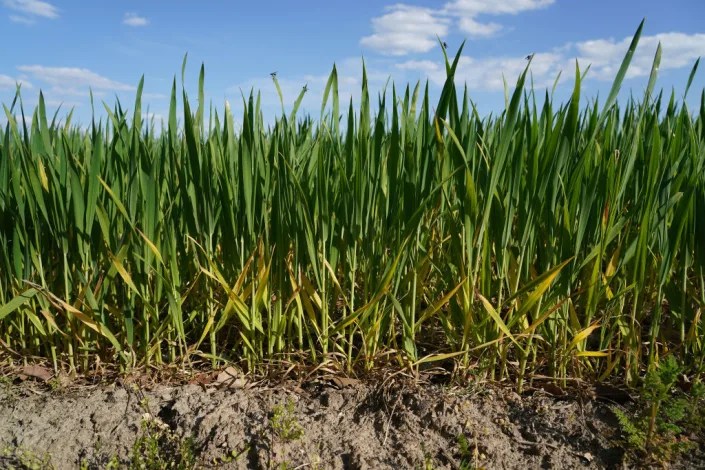

Young wheat grows in parched soil on a field during very dry weather on April 27, 2020 near Luckau, Germany. Credit – Sean Gallup—Getty Images


One of the most significant carbon sinks on the planet is right below your feet. Soil, that layer of organic material and crushed-up rock that covers much of the terrestrial earth like a chocolate coating, contains about 2,500 billion metric tons of carbon. It’s the second-biggest carbon sink on the planet after the ocean, currently holding about three times as much carbon as the atmosphere. Some scientists and activists think it could do even more.

And increasingly, companies and governments agree. From Ben & Jerry’s to Unilever, companies are calling for more environmentally friendly farming practices as a way to meet net-zero goals. Meanwhile, the U.S. Department of Agriculture last year announced it would be investing $10 million to better monitor and measure soil’s carbon sequestration under its Conservation Reserve Program.

“Soil is the foundation of human civilization,” says Jeff Creque, director of rangeland and agroecosystem management at the Carbon Cycle Institute, an environmental organization based in California working to boost the carbon-sequestering power of soil and other natural carbon sinks. “We don’t have agriculture without fertile soils, and we don’t have fertile soils without carbon rich-soils.”

The Role of Soil
Carbon in soil takes two forms: organic (derived from living things) and inorganic. Inorganic carbon comes from carbon-containing rocks like limestone, marble, and chalk, which are most common in desert soils, as well as reactions between atmospheric carbon dioxide and minerals in the soil. But the majority of the carbon contained in soil is organic, and it’s this organic material that sets it apart from lifeless dirt.

Plants are the main source of organic carbon in soil and the main bridge carbon takes between the atmosphere and the earth. They absorb carbon from the atmosphere through photosynthesis, the process by which plants convert carbon dioxide into the carbohydrates they use for energy and to build their bodies. When plants die or shed leaves, petals, or other debris, the decomposers that live in the soil below consume them; they also eat the carbon-containing mucilage (a thick, gluey secretion) that roots exude while they’re alive.

The decomposers will re-release some of the carbon back into the atmosphere as they respirate; this carbon spends only a short amount of time in the soil. But several mechanisms can draw the carbon deeper into the soil, where it can be sequestered for years, decades, or longer. Rain, for example, can dissolve some carbon compounds and carry them deep into the groundwater. Mycorrhizal fungi, which form a symbiotic relationship with plants, carry carbon along their deep, rootlike hyphae and secrete compounds that help glue it in place.

And some carbon compounds can bind with the minerals in clay, a form of carbon sequestration that can last hundreds or even thousands of years. This chemically bonded carbon is part of soil’s stable carbon pool, together with carbon that has traveled deep enough in the soil (about 1 meter) to avoid being consumed and respirated into the atmosphere. (Carbon can also be sequestered long-term in frozen soil, as in the permafrost.)

How Farming Impacts Soil Health
All of these mechanisms are most effective in healthy, minimally disturbed soil with plenty of organic material from a thriving community of living things. Unfortunately, there’s less and less of this kind of soil left on the planet. Some of the most significant remaining swaths of soil are controlled by agriculture, which covers about 38% of the global land surface. But standard agricultural practices like tilling disrupt the downward path of carbon, exposing once-sequestered organic compounds to the air and allowing carbon to escape into the atmosphere.

That’s where regenerative agriculture, sometimes called carbon farming, comes in. This approach to agriculture focuses on restoring and maintaining soil health through a holistic set of practices, including reducing tilling, composting farm waste, and planting plots with cover crops such as clover so they continue receiving carbon when they aren’t being used for other things. In addition to absorbing more carbon, proponents say this approach can help recharge groundwater, prevent pests, and increase crop yields.

Regenerative agriculture is based on practices far older than modern industrial farming, championed in recent years by activists like Robert Rodale of the Rodale Institute and Allan Savory of The Savory Institute. Their initial acolytes tended to be small, experimental farmers and organic producers. But in the past decade, several multinational corporations have announced goals to adopt regenerative agriculture practices, including Unilever, PepsiCo, and General Mills. These commitments help corporations toward their net-zero goals, in addition to protecting their supply chains against the effects of global warming, drought, and desertification.

Using Soil as the Solution
Some corporate advocates of regenerative farming, including Ben & Jerry’s and Timberland, have formed a coalition with farmers to lobby Congress to include funds to support regenerative agriculture in the 2023 Farm Bill. This coalition, Regenerate America, argues in its policy recommendations that regenerating the soil can impact not only the climate but also rural economies, communities, and health outcomes.

Some farmers and scientists are experimenting with soil additives, called amendments, to further boost soil’s carbon-sequestering potential in conjunction with regenerative agriculture. One of the most promising amendments is rock dust. While most of the more familiar soil amendments, like compost and manure, boost the organic pathways for carbon to enter the soil, rock dust also jumpstarts the inorganic pathways.

The soil amendment currently garnering the most buzz may be rock dust, though it’s far from a new technology. “Rock dust has been applied to lands at a large scale for many years because farmers knew that ground-up rock holds important mineral nutrients for plants,” says Whendee Silver, a professor of ecosystem ecology and biogeochemistry at University of California, Berkeley. It’s been used in Europe since at least the late 19th century, when the German doctor Julius Hensel published the book “Bread From Stones” advocating for what he called “stonemeal manure” made from igneous rocks, which form through the cooling and solidification of magma or lava.

Today, researchers are experimenting primarily with crushed basalt, an igneous rock rich in minerals including iron, magnesium, and calcium—similar in composition to the rock found in the famously fertile soils that surround volcanoes. Basalt is one of the most common rocks in the upper layers of the earth’s crust, and mining operations bring up huge amounts of it as they search for more profitable things underneath. “​​Putting that material out onto soils is a win-win as long as the material is safe,” Silver says—that is, not contaminated with heavy metals or other toxic substances.

In the presence of water, the magnesium and calcium in the basalt react with the carbon in the atmosphere and soil to form bicarbonates, which can remain dissolved in the groundwater or eventually precipitate out as a solid. This makes the carbon unavailable for decomposers, so it won’t be respirated back into the atmosphere. Basalt also contains minerals like potassium and phosphorus that are essential for plants, which can help increase crop yields—and healthy plants absorb more carbon.

Another soil amending technology is biochar, a black substance made by applying heat to plant matter in a low-oxygen environment. Creating biochar releases less carbon dioxide than burning plants or allowing them to decay, two of the usual routes to get rid of the inedible parts of crops, grass, or trees that farmers clear to plant new fields.

About 50% of the carbon in the plants remains trapped in the biochar, which can then be added to soil to boost water retention and fertility. This method has been promoted as a more technologically feasible and localized alternative to carbon capture and sequestration technology; consumers can already buy cookstoves to make their own biochar at home.

“At this point in our history, we’re looking at every possible strategy,” says Creque. “The beauty of terrestrial sequestration … is that we see this enormous raft of co-benefits that emerges with those strategies.”

—With reporting by Jennifer Junghans

This article is part of a series on key topics in the climate crisis for time.com and CO2.com, a division of TIME that helps companies reduce their impact on the planet. For more information, go to co2.com

LAND MATCHING – Center for Rural Affairs

https://www.cfra.org/land-matching

Cait Caughey at caitc@cfra.org

Land matching lets our rural communities have a brighter future, by letting young farmers work the land.  

Land matching keeps our family farms strong. It keeps our rural communities vibrant. It ensures that the American independent farmer is here to stay.

NEW FARMER/RANCHER BENEFITS

  • gain access to land
  • find help with financing
  • learn from experienced landowners

LANDOWNER BENEFITS

  • tax incentives and other financial benefits
  • ease transition into retirement
  • ensure the continuity of a farm’s operation and legacy
  • bring fresh energy and strong hands to work on the farm

EVERYBODY BENEFITS

  • small family farms continue a proud American tradition
  • rural communities thrive with new farm families

Land matching is a great way for new farmers to get started, for retiring farmers to make sure their operation will continue long into the future, and for rural communities to stay strong.

How do matching programs work?

All matching programs work a little differently, but the basics are the same:

  1. Sign up: The program compiles lists of new farmers and of landowners who want to link.
  2. Match time: Usually, the new farmer must contact a landowner.
  3. Talk about it: Both parties get to know each other and decide whether/how to link.

Think before you link: Most application forms ask about participants’ assets, experience, and goals. Both landowners and beginners need to know what they want to get out of a linking relationship before they start trying to work it out with each other. This worksheet for beginners and this worksheet for landowners will help you describe what you’re looking for and what assets you bring to the discussion. Before you link, you should:

  • Know what you want and need
  • Be flexible where you can and firm on what you need

Most programs focus on specific states or regions, so new farmers can find matches in the area where they want to farm. Some matching programs work with farmers nationwide.

Looking for even more opportunities? Use your acquaintance network to build connections in the area you want to farm. Anyone—family, friends, business acquaintances, extension agents, real estate agents, postmasters, feed store staff, and more—can be your “in” to a farm transition opportunity. The more people you build relationships with and the more people know you’re looking for and seriously committed to a farming or ranching opportunity, the better your chance of being in the right place at the right time to access that opportunity.


How Soil Microbes Improve Fertilizer Efficiency

https://www.holganix.com/blog/how-soil-microbes-improve-fertilizer-efficiency

https://www.holganix.com/blog/how-soil-microbes-improve-fertilizer-efficiency

By Kaitlyn Ersek on Feb 10, 2022 10:15:00 AM

Did you know, last year the U.S. spent $18.6B (20.5M tons) on fertilizer? Over 60 percent of that fertilizer was used on corn, soybean, wheat, and cotton.  

Yet scientific literature states that over 50% of fertilizer is lost because it becomes tied in the soil, washes off, erodes, or becomes volatilized in the air. That loss equates to $9.3 B USD.  

“The waste is outrageous. And the thing is, soil microbes improve fertilizer efficiency,” explains Dave Stark, P.hD., and President of Agriculture at Holganix, LLC. “Biologically healthy soils create greater corn yields per unit of nitrogen input.”  

In this blog, we discuss how soil microbes improve fertilizer efficiency. Click the link to skip to the topic of your choosing, or continue scrolling to read the full report.  

  1. Higher nitrogen efficiency with higher microbial populations 
  2. What about phosphorus and potassium?
  3. Accessing nutrients via crop residue breakdown 
  4. A note on diversity and microbial inoculants 
  5. Video interview with Dave Stark, Ph.D. on soil microbes and fertilizer efficiency  

Higher Nitrogen Efficiency With Higher Microbial Populations 

A meta-study from Nature Research Scientific Reports reviewed 230 published studies on how microbes interact with fertilizer. According to that study, only 36-42% of the current year’s applied nitrogen goes to the crop (corn, rice, and small grains).  

In fact, soil organic nitrogen turnover (the nitrogen that is mineralized or cycled by microbes) contributes more than the nitrogen we apply to the crop.

And, since microbes increase the soil’s ability to mineralize or cycle nitrogen, the presence of high microbial populations leads to better nitrogen efficiency.  

“Using a microbial and using farming techniques that foster beneficial microbial populations, increases your farm’s ability to use fertilizer efficiency and can reduce the need for fertilizer,” explains Dave.  

“This is so critical to farming today. Fertilizer prices are high. Farmers need an edge to reduce costs and increase their crop productivity.”  


What About Phosphorus And Potassium? 

soil

“The top six inches of soil is abundant in phosphorus and potassium, but extraordinarily little of that phosphorus and potassium is bioavailable,” states Dave. In other words, phosphorus and potassium become bound in the soil and the plant cannot access them.  

Yet, while the plant cannot access these bound nutrients, soil microbes can! Microbes break down phosphorus, potassium, and other micronutrients and feed them back into the plant root.  

This is just another way microbes increase fertilizer efficiency. 


Accessing Nutrients Via Crop Residue Breakdown

In addition to solubilizing and mineralizing nutrients, microbes also make nutrients like nitrogen, phosphorus, and potassium available by breaking down crop residue. Crop residue is filled with valuable nutrients. As an example, corn stover holds about 17 lbs of nitrogen, 4 lbs of phosphorus, and 34 lbs of potassium per ton.  

Having an abundant source of degrading soil microbes allows farmers to use no-till farming techniques to access these nutrients.  


A Note On Diversity And Using Microbial Inoculants 

Microbial inoculants are soil amendments containing microbial species. Most microbial inoculants contain just a handful of bacterial species, while others like, Holganix Bio 800+, contain a large diversity of soil microbe species including bacteria, fungi, and protists.  

Choosing to use a microbial product that contains only a few species of plant growth-promoting bacteria or nutrient solubilizing bacteria might boost root mass or improve the availability of a single nutrient, such as phosphorus. However, products with just a few species of microbes, can’t do everything. Instead, they focus on a narrow piece of the puzzle. For example, a bacteria-only product won’t cycle nitrogen efficiently since bacteria require a lot of nitrogen to grow. Microbes that eat bacteria, namely fungi and protists, require much less nitrogen and cycle it back to the crop. 

With Holganix Bio 800+, growers do not have to choose; over 800 species of bacteria, fungi and protists are present including a broad range of plant growth promoters and nutrient solubilizers. In fact, the microbes in Bio 800+ consume fertilizer and keep it in the root zone, all while cycling nutrients back to the plant so more nutrients go to the crop instead of being lost in the environment.  

Holganix Bio 800+ has consistently given farmers a 2-10x ROthrough increased crop yields and improved fertilizer efficiency. Bio 800+ is a valuable tool that allows growers to back off inputs knowing more of the inputs put down will actually feed the crop. 

When it comes to the turf and ornamental industry, Holganix Bio 800+ has consistently allowed turf managers to reduce their fertilizer use by 50% without sacrificing results. 


Want To Learn More About How Soil Microbes Can Increase Fertilizer Efficiency?  

Watch the webinar recording below for a conversation with Holganix President of Agriculture, Dave Stark, Ph.D. on 

  • How microbes increase nutrient uptake and availability (including phosphorus) 
  • The role of soil microbes in soil health and crop performance 
  • Insights and data from university studies, and Holganix studies, on how microbes increase fertilizer efficiency 

Case Studies: Economic Benefits of Applying Soil Health Practices

by:  Florence Swartz

https://www.nrcs.usda.gov/wps/portal/nrcs/detail/national/soils/health/?cid=nrcseprd1470394

With soil health management, producers can increase profits and reduce costs and risk all while conserving our nation’s resources for the benefit of all. However, the extent of these economic benefits has not been consistently quantified – a major constraint to soil health management adoption identified as a priority by NRCS and many of its customers.

We hope that farmers who have been considering adding soil health practices to their operation will use these case studies to make better business decisions as they invest in healthy soils, and to start a dialog with landowners about sharing the risks and rewards of soil health investments. We believe our staff and partners can use these case studies to help answer customers’ questions about the costs and benefits of adopting soil health practices.

Background
Funded by an NRCS’ Conservation Innovation Grant (CIG) awarded in 2018, American Farmland Trust (AFT) and NRCS have started to release a series of Soil Health Economics case studies. USDA and NRCS have invested in the people and tools that provide these quantitative assessments. AFT utilized this infrastructure to show the economic benefits across a broad sampling of farming operations and worked closely with NRCS Economists & Soil Health Specialists to review these case studies. In addition to the funding for the project, USDA and NRCS resources were further leveraged:

Florence Swartz is AFT’s Project Economist and served as the NRCS New York State Economist, where she developed two well-received soil health economic case studies that have since been used as the template for the AFT project.

read more at the link above~~